
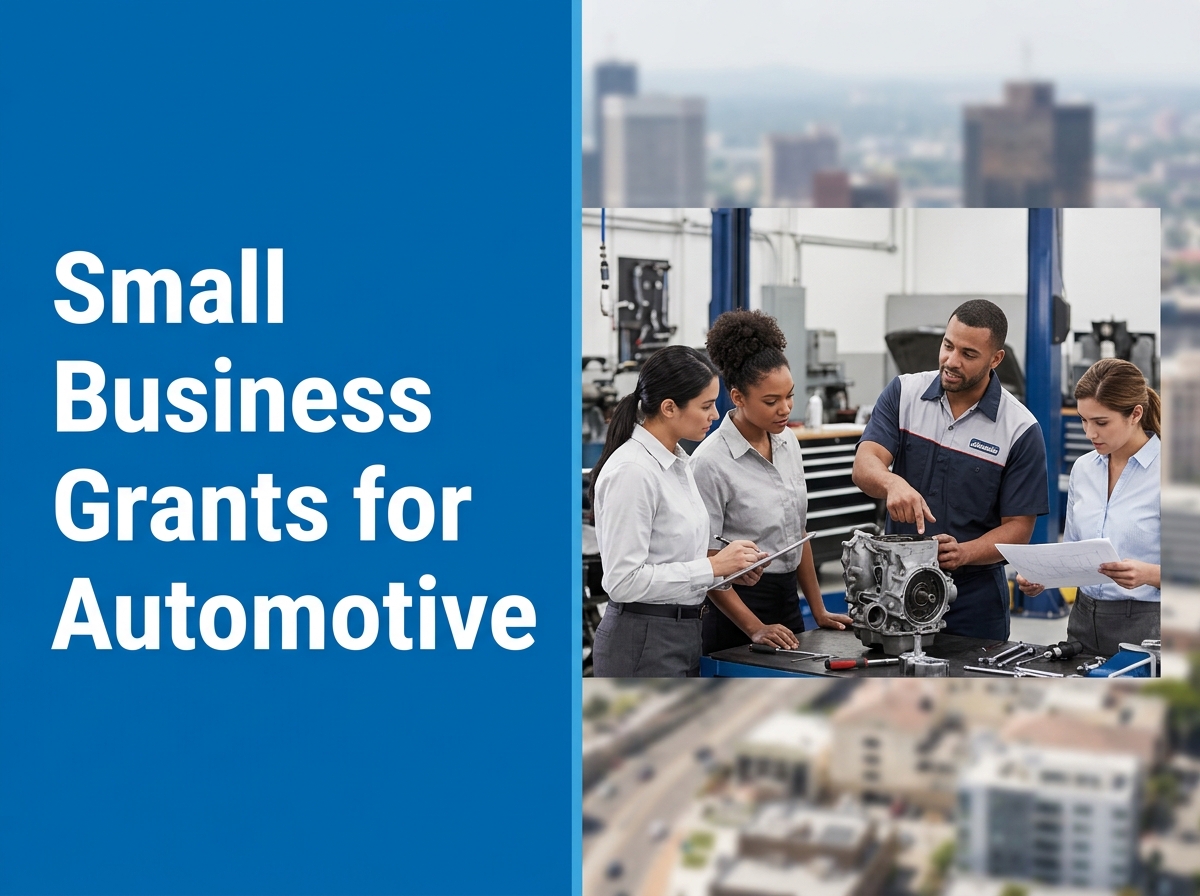
Navigating the financial volatility of the automotive sector often leaves small business owners struggling to balance rising operational costs with the urgent need for technological upgrades. Traditionally, entrepreneurs have relied on high-interest commercial loans or personal credit lines to bridge these capital gaps, often straining their long-term debt-to-equity ratios. However, specialized automotive grants offer a transformative alternative by providing non-dilutive capital that fuels growth without the burden of interest or repayment.
It is essential to recognize that these funds are not mere handouts; they are governed by strict stipulations regarding workforce development and technical innovation. For example, programs like the Department of Energy's SBIR grants have successfully supported small enterprises transitioning to electric vehicle (EV) infrastructure. Success in this competitive landscape requires more than just a viable business model-it demands administrative precision. This guide outlines the essential eligibility requirements, necessary financial documentation, and the rigorous application protocols required to secure high-value funding for your automotive enterprise.
Overview of Automotive Sector Grant Opportunities
The automotive industry is currently undergoing a structural transformation driven by electrification and advanced manufacturing technologies. To support this evolution, various grant opportunities are available to small businesses, providing non-dilutive capital to facilitate innovation and operational expansion. These financial incentives primarily originate from federal and state agencies, as well as private foundations dedicated to industrial growth.
Grant programs in this sector typically focus on key strategic areas, including the development of electric vehicle (EV) infrastructure, improvements in supply chain resilience, and the adoption of sustainable manufacturing practices. Furthermore, funding is frequently allocated for workforce development, ensuring that technicians and engineers possess the technical proficiency required for modern automotive systems.
By accessing these resources, small enterprises can offset the substantial costs associated with research, development, and equipment upgrades. Successful applicants generally demonstrate a clear alignment with broader economic objectives, such as domestic manufacturing sovereignty or the reduction of carbon emissions within the transportation sector.
Eligibility Criteria for Auto Repair and Manufacturing Startups
To secure small business grants within the automotive sector, startups must adhere to stringent eligibility requirements established by federal, state, and private redundant funding bodies. Primary criteria often revolve around the following parameters:
- Legal Entity Status: Applicants must be formally registered as a legal business entity, such as an LLC or Corporation, and possess a valid Employer Identification Number (EIN).
- Industry Classification: Businesses must operate under specific North American Industry Classification System (NAICS) codes, typically within the 8111 (Automotive Repair and Maintenance) or 3361 (Motor Vehicle Manufacturing) sectors.
- Size Standards: Startups must align with Small Business Administration (SBA) size standards, which define eligibility based on annual revenue or total employee headcount.
- Project Scope: For manufacturing, priority is often given to firms focusing on innovation, such as electric vehicle (EV) components or sustainable materials. Repair shops may need to demonstrate local economic impact or service in underserved areas.
- Operational Readiness: A comprehensive business plan, financial projections, and proof of matching funds are frequently required to demonstrate long-term viability.
Essential Business Documentation and Financial Records
Securing small business grants in the automotive sector requires a rigorous compilation of organizational and financial data. Granting agencies and private foundations utilize these records to verify a company's legal legitimacy, operational capacity, and long-term viability.
Required documentation typically includes:
- Organizational Documents: Filed Articles of Incorporation, LLC Operating Agreements, and a valid Employer Identification Number (EIN).
- Financial Statements: Comprehensive profit and loss statements, balance sheets, and cash flow projections for the previous two to three fiscal years.
- Tax Compliance: Recent federal and state business tax returns to demonstrate fiscal responsibility and transparency.
- Industry-Specific Licensing: Valid automotive repair shop licenses, environmental permits, and relevant professional certifications.
Maintaining meticulously organized records is vital, as discrepancies in financial reporting often result in immediate disqualification. Furthermore, a well-structured business plan outlining how the grant funds will facilitate technical growth or innovation within the automotive space is essential for a competitive application.
Navigating Federal and State Registration Systems
To secure federal or state grants for automotive ventures, businesses must complete rigorous registration protocols. The primary requirement for federal opportunities is enrollment in the System for Award Management (SAM.gov). This platform facilitates the issuance of a Unique Entity ID (UEI), a mandatory identifier for all applicants seeking federal financial assistance.
At the state level, automotive businesses must demonstrate legal compliance by registering with the respective Secretary of State. This process often includes obtaining a state-specific business license and tax identification number. Furthermore, many jurisdictions utilize localized procurement systems to manage grant disbursements for sector-specific initiatives, such as electric vehicle (EV) infrastructure expansion or technical workforce training programs.
Navigating these systems requires precision, as discrepancies in business documentation can lead to application disqualification. Maintaining updated profiles across both federal and state databases ensures that automotive enterprises remain eligible for a wide array of competitive funding opportunities available within the industry.
Developing a Compelling Grant Proposal Narrative
A persuasive grant proposal narrative is essential for automotive small businesses seeking non-dilutive capital. This document must clearly articulate the enterprise's mission, operational objectives, and the specific impact the funding will have on the regional or national automotive landscape.
To optimize the narrative, applicants should identify a critical industry challenge-such as the transition to electric vehicle (EV) infrastructure, enhancements in autonomous safety, or manufacturing efficiency-and present a scalable solution. It is vital to align the proposal with the grantor's specific priorities, whether they emphasize environmental sustainability, workforce development, or technological innovation.
- Problem Statement: Define the specific market gap or technical hurdle being addressed.
- Project Goals: Establish measurable objectives and realistic project milestones.
- Economic Impact: Outline potential for job creation and strengthening the local supply chain.
- Financial Viability: Demonstrate long-term operational sustainability beyond the grant period.
By utilizing data-driven evidence and a structured logic model, automotive entrepreneurs can differentiate their applications. A well-crafted narrative ensures reviewers comprehend both the technical merit and the socio-economic value of the proposed initiative.
Strategic Budgeting and Resource Allocation Protocols
Securing small business grants within the automotive industry necessitates a disciplined approach to fiscal management. Strategic budgeting protocols ensure that awarded capital is deployed with precision, targeting high-impact areas such as advanced diagnostic equipment, sustainable infrastructure, and specialized technician training.
Effective resource allocation involves several critical components to ensure long-term viability:
- Capital Prioritization: Directing funds toward technological upgrades that offer the highest return on investment and operational efficiency.
- Regulatory Compliance: Maintaining rigorous documentation and transparent accounting practices to satisfy specific grant reporting requirements and audits.
- Operational Scalability: Ensuring that allocated resources support sustainable growth and adaptation to emerging electric vehicle (EV) and autonomous technology trends.
By integrating these protocols, automotive enterprises can maximize the utility of non-dilutive funding. A structured financial framework not only mitigates fiscal risk but also strengthens the organization's competitive positioning within the evolving global mobility landscape.
Aligning with Green Energy and Sustainability Standards
As the automotive industry pivots toward a low-carbon economy, many small business grants are increasingly tied to green energy initiatives and environmental sustainability. Federal and state funding programs frequently prioritize automotive enterprises that demonstrate a documented commitment to reducing their carbon footprint or advancing clean energy technologies.
To access these financial resources, small businesses must align their operations with modern environmental standards. This often involves transitioning to electric vehicle (EV) service capabilities, investing in energy-efficient workshop infrastructure, or adopting sustainable manufacturing processes. Granting bodies typically favor applicants who contribute to broader climate goals, such as improving fuel efficiency, reducing industrial waste, or implementing renewable energy sources within their facilities.
Adhering to these sustainability benchmarks not only qualifies a business for non-dilutive funding but also ensures long-term compliance with evolving regulatory requirements. By integrating eco-friendly practices, automotive small businesses can enhance their market competitiveness while securing the capital necessary for technological modernization and sustainable growth in a rapidly changing sector.
Technical Requirements for Digital Application Submissions
To ensure the successful processing of small business grant applications within the automotive sector, applicants must adhere to rigorous technical standards. Submissions must be executed through the designated electronic portal, utilizing compatible web browsers such as the latest versions of Google Chrome, Mozilla Firefox, or Microsoft Edge.
Documentation must be uploaded in specific, non-editable formats-primarily PDF for narrative proposals and XLSX for financial spreadsheets-to maintain data integrity. Please observe the following technical constraints:
- File Size Limits: Individual attachments should not exceed 10MB; total submission packages are typically capped at 50MB.
- Naming Conventions: Files must be labeled clearly without special characters, following a BusinessName_DocumentType structure.
- Security Protocols: Applications must not be password-protected or encrypted, as these measures interfere with automated administrative review tools.
- Digital Signatures: Verified electronic signatures are required on all binding agreements and certification forms.
Failure to comply with these digital specifications may result in the automated disqualification of the grant proposal due to technical non-compliance.
Timeline Management and Critical Filing Deadlines
Securing small business grants within the automotive sector requires rigorous adherence to structured timelines. Federal and state agencies, such as the Department of Energy (DOE) or Department of Transportation (DOT), strictly enforce specific filing windows. Missing a single deadline typically results in immediate disqualification, regardless of the proposal's technical merit or potential industry impact.
Effective timeline management involves identifying three primary milestones: the Initial Notice of Funding Opportunity (NOFO), the Letter of Intent (LOI) submission date, and the final application deadline. Automotive entrepreneurs must also account for internal lead times necessary for procuring technical specifications, environmental impact assessments, and comprehensive financial audits required for the submission package.
Furthermore, post-award compliance necessitates tracking periodic progress reports and fund utilization audits with fixed reporting cycles. Maintaining a centralized grant calendar is essential for managing diverse funding streams-ranging from electric vehicle (EV) infrastructure credits to workforce development initiatives. Prioritizing these critical dates ensures that the enterprise remains eligible for the non-dilutive capital essential for sustained innovation and operational scaling.
Post-Award Compliance and Grant Reporting Frameworks
Securing a small business grant within the automotive sector necessitates strict adherence to post-award compliance protocols. These frameworks are designed to ensure fiscal accountability and verify that awarded capital is utilized for its intended purposes, such as specialized equipment procurement, EV technology research, or workforce training initiatives.
Recipient businesses must implement robust internal tracking systems to facilitate accurate grant reporting. Standard requirements typically include:
- Financial Documentation: Maintaining meticulous ledgers and receipts for all grant-related expenditures to ensure audit readiness.
- Performance Milestones: Providing periodic updates that demonstrate progress toward specific project goals established in the grant agreement.
- Impact Assessments: Reporting quantitative data regarding how the funding has improved operational efficiency or supported local economic development.
Maintaining transparency through these reporting structures is vital. Failure to comply with stipulated guidelines can lead to fund reclamation or disqualification from future funding cycles. A disciplined approach to grant management ensures long-term operational sustainability and strengthens the professional integrity of the automotive enterprise.
Leave a comment