
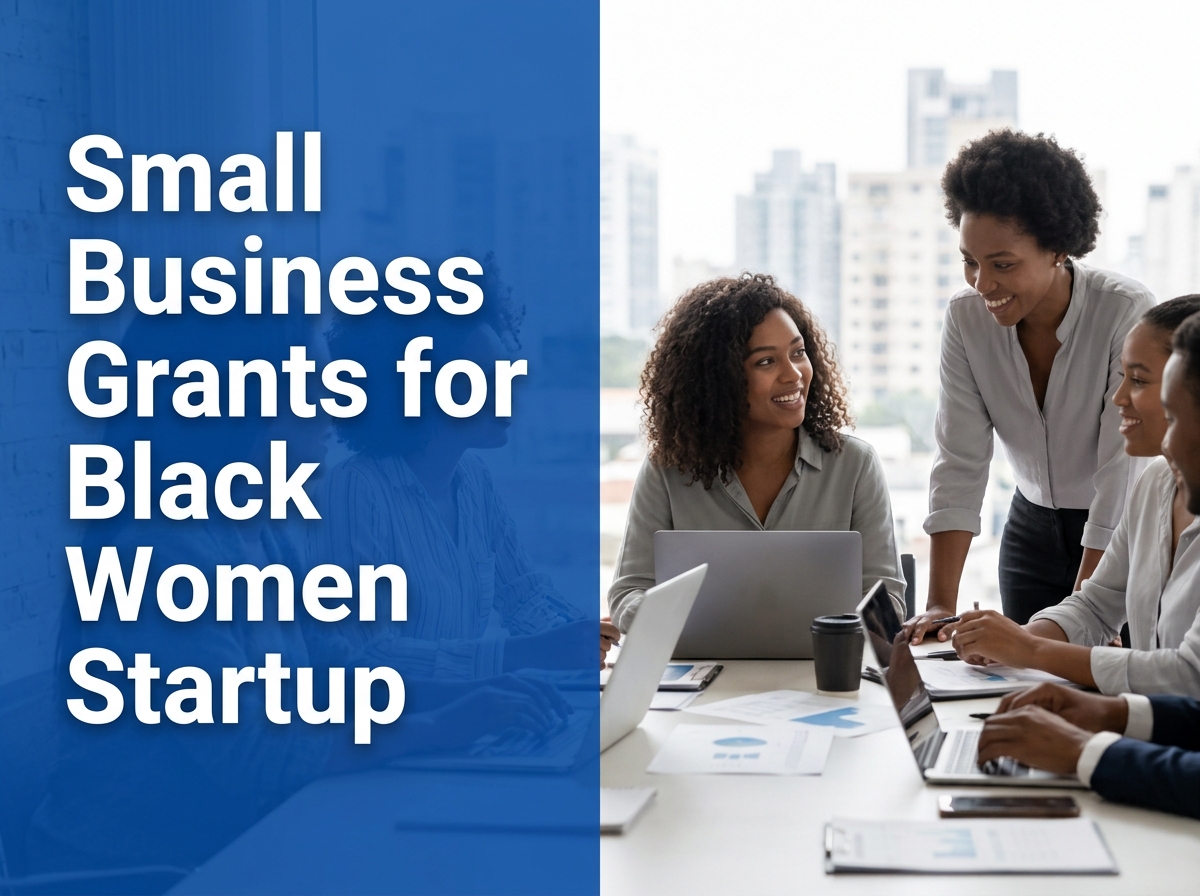
For many Black women entrepreneurs, the ambition to scale a business is often met with the stark reality of systemic funding gaps. While traditional avenues such as commercial bank loans and venture capital are standard pillars of business finance, they frequently present high barriers to entry, including prohibitive interest rates or the requirement to forfeit company equity. In contrast, small business grants emerge as a critical "value add," offering non-dilutive, debt-free capital that allows founders to retain full ownership while fueling growth.
However, navigating this landscape requires an understanding that grants are not "free money" without strings; they come with rigorous stipulations regarding business maturity, tax compliance, and mission alignment. Proven programs such as the Fearless Fund and the Amber Grant for Women demonstrate that while the competition is intensive, success is achievable through meticulous preparation. This guide provides a consultative roadmap for the application process, detailing essential eligibility requirements, documentation protocols, and strategic positioning to ensure your business stands out to selection committees.
The Current State of Funding for Black Women Entrepreneurs
Black women represent the fastest-growing demographic of entrepreneurs in the United States. However, a significant disparity remains in the distribution of institutional capital. Statistical data consistently indicates that Black women founders receive less than 1% of total venture capital funding annually. This venture gap is compounded by traditional lending hurdles, where systemic biases and stringent collateral requirements often result in higher rejection rates for commercial bank loans compared to other demographics.
Due to these challenges, many Black women-led startups must rely on bootstrapping or personal savings to maintain operations. To bridge this financial divide, there is an increasing reliance on targeted small business grants and non-dilutive capital. These funding mechanisms, often provided by corporate social responsibility initiatives, non-profit organizations, and specialized investment firms, are essential for scaling early-stage ventures. While awareness of these funding inequities is growing, the current landscape necessitates a strategic focus on grants and community-based financial institutions to foster sustainable business growth and economic equity.
Identifying Diverse Grant Streams for Early Stage Startups
For Black women entrepreneurs, securing early-stage capital requires a strategic approach to identifying diverse, non-dilutive funding sources. Navigating the grant landscape involves evaluating three primary streams: government-backed initiatives, corporate-sponsored programs, and private foundation awards.
Federal and state resources, such as those provided by the Minority Business Development Agency (MBDA), offer structured support aimed at closing the economic gap for underrepresented founders. Simultaneously, many global corporations have established dedicated grant cycles specifically for Black female-led startups, often pairing financial capital with mentorship and professional networking opportunities.
Furthermore, specialized non-profit organizations and venture-philanthropy funds provide niche grants focused on identity-specific empowerment. To optimize the application process, founders must align their business objectives with the specific mission of the grantor. By leveraging a combination of public and private opportunities, Black women can secure the essential equity-free funding needed to validate their business models and achieve sustainable growth in the competitive startup ecosystem.
Essential Eligibility and Certification Requirements
To qualify for specialized grants directed toward Black women entrepreneurs, startups must adhere to stringent demographic and legal criteria. The primary requirement is ownership structure: the business must be at least 51% owned, operated, and controlled by one or more individuals identifying as Black women. Furthermore, the entity must be legally registered within its jurisdiction and operate as a for-profit enterprise.
Official certifications are often vital for enhancing an application's credibility and meeting the verification standards of grant-making bodies. Founders should prioritize the following credentials:
- Minority Business Enterprise (MBE): Validates minority ownership through recognized regional or national councils.
- Women's Business Enterprise (WBE): Formally confirms that a business is woman-owned and operated.
- Women-Owned Small Business (WOSB): Essential for accessing federal set-aside contracts and specific government-backed funding.
Additionally, applicants must maintain a Federal Tax Identification Number (EIN) and provide comprehensive documentation, including a structured business plan and financial statements. Ensuring all regulatory filings are current is mandatory to demonstrate organizational stability and growth potential during the competitive review process.
Organizing Your Financial and Legal Documentation
Securing startup grants requires a high level of administrative readiness. For Black women entrepreneurs, presenting a cohesive set of financial and legal records is critical to demonstrating business viability and meeting strict eligibility criteria. Granting organizations typically require proof of legal structure, such as Articles of Incorporation, Operating Agreements, and an Employer Identification Number (EIN).
Financial transparency is equally vital. Business owners should maintain updated profit and loss statements, balance sheets, and comprehensive tax returns. Many grant applications specifically request detailed project budgets and cash flow projections to evaluate how the awarded capital will facilitate sustainable growth and community impact.
To streamline the submission process, centralize these documents in a secure digital repository. Ensure all certifications-specifically Minority Business Enterprise (MBE) or Women-Owned Small Business (WOSB) designations-are current and easily accessible. This rigorous approach to organization not only ensures timely applications but also reinforces professional credibility during the competitive evaluation process.
Developing a Persuasive Business Growth Narrative
For Black women entrepreneurs navigating the competitive startup ecosystem, a persuasive business growth narrative is a critical component of a successful grant application. This narrative serves as a strategic framework that connects the venture's current operational state to its future potential, providing grantors with a clear vision of scalability and long-term viability.
To develop an effective narrative, applicants must articulate their unique value proposition while aligning their organizational goals with the specific mission of the grant provider. It is essential to transition beyond basic financial requirements to describe how the capital will catalyze specific milestones, such as technological integration, market penetration, or community-based job creation.
A professional narrative leverages objective data and market analysis to substantiate growth claims. By demonstrating a thorough understanding of the competitive landscape and presenting a realistic roadmap for sustainability, founders establish the credibility necessary to secure non-dilutive capital. Ultimately, the narrative should emphasize strategic foresight and impact, positioning the startup as a high-potential investment for community and economic development.
Mastering the Technical Application and Submission Protocol
For Black women entrepreneurs launching startups, navigating the technical requirements of grant applications is a critical phase in securing non-dilutive capital. Proficiency in submission protocols ensures that a viable business concept is not disqualified due to administrative or technical oversights.
The process begins with thorough registration on relevant digital platforms, such as Grants.gov or specific private foundation portals. Applicants must verify that all organizational identifiers, including Employer Identification Numbers (EIN) and Unique Entity Identifiers (UEI), are active and accurately reflected in the system. Documentation-such as articles of incorporation, financial statements, and business plans-must strictly adhere to specified file formats (typically PDF) and naming conventions to pass automated screening filters.
Technical compliance also demands rigorous attention to character limits and data entry fields within online forms. To mitigate the risk of platform latency or transmission errors, it is standard practice to complete submissions at least 48 hours prior to the deadline. Conducting a final audit of the digital package ensures all mandatory attachments are uploaded and legible, preserving the integrity of the application for the merit-based review committee.
Leveraging Community Resources and Development Centers
For Black women entrepreneurs navigating the startup landscape, local community resources and business development centers serve as essential conduits to capital and professional growth. Organizations such as Small Business Development Centers (SBDCs) and the Minority Business Development Agency (MBDA) provide specialized assistance designed to address the systemic challenges faced by minority-led firms. These centers offer technical training, grant-writing workshops, and one-on-one mentorship, which collectively enhance a startup's competitiveness when applying for private and federal funding.
Furthermore, engaging with local non-profit organizations and regional chambers of commerce can provide access to exclusive localized grant opportunities and revolving loan funds. These institutions often assist in refining business plans and financial statements-critical documentation required for grant eligibility. By leveraging these structured support systems, Black women business owners can secure the necessary guidance to navigate complex application processes, ensuring their enterprises are positioned for long-term operational sustainability and economic success.
Strategic Networking for Exclusive Funding Insights
For Black women entrepreneurs, securing startup capital often necessitates moving beyond public databases into specialized professional networks. Strategic networking serves as a critical conduit for discovering "hidden" grant opportunities that may not be widely advertised. By engaging with industry-specific organizations, local chambers of commerce, and advocacy groups dedicated to minority business development, founders gain access to internal referrals and early-stage alerts regarding upcoming funding cycles.
Cultivating relationships with program officers and past grant recipients provides qualitative insights into the specific priorities of funding bodies. These interactions often reveal the nuanced criteria and organizational values that quantitative guidelines may overlook. Participation in mentorship programs and professional accelerators further positions startups within an ecosystem of trust, facilitating warm introductions to private foundations and corporate social responsibility initiatives. Consequently, a robust professional network acts as a strategic asset, transforming community engagement into a reliable source of exclusive intelligence and a distinct competitive advantage in the grant acquisition process.
Critical Mistakes to Avoid in Grant Applications
Securing non-dilutive funding requires meticulous attention to detail. For Black women entrepreneurs launching startups, avoiding common procedural and substantive errors is vital for a successful evaluation process. Common mistakes include:
- Inadequate Eligibility Alignment: Applying for grants without confirming that the business meets specific demographic, industry, or geographic criteria often leads to immediate disqualification.
- Vague Financial Projections: Failure to provide a clear, data-driven explanation of how the capital will be deployed to achieve scalable growth can undermine the credibility of the proposal.
- Incomplete Documentation: Missing essential attachments, such as business licenses, tax identification numbers, or detailed business plans, remains a primary reason for rejection.
- Ignoring Submission Guidelines: Disregarding specific formatting instructions, word counts, or deadlines demonstrates a lack of professional rigor.
- Weak Value Proposition: Neglecting to articulate how the startup aligns with the grantor's mission or fails to demonstrate a measurable community impact.
Precision, transparency, and strict adherence to the funder's objectives are essential to distinguish a startup within a competitive grant landscape.
Next Steps After Securing Your Startup Capital
Securing grant funding is a transformative milestone for Black women entrepreneurs. However, the receipt of capital necessitates a transition from fundraising to rigorous operational stewardship. To maximize the impact of these resources, business owners must prioritize institutional accountability and strategic growth.
First, establish a comprehensive compliance and reporting framework. Most grantors require meticulous documentation of fund allocation. Implementing robust accounting software and maintaining detailed records of every expenditure ensures transparency and preserves your eligibility for future funding cycles.
Second, execute your strategic deployment plan. Capital should be directed toward the high-impact milestones identified in your business proposal, such as infrastructure development, inventory acquisition, or targeted marketing. Adhering to a structured budget prevents capital depletion and ensures that every dollar contributes to long-term scalability.
Finally, focus on revenue sustainability. While grants provide essential bridge capital, the ultimate goal is to build a self-sustaining enterprise. Reinvesting initial gains into core operations will strengthen your market position and reduce reliance on external subsidies, fostering a resilient business foundation.
Leave a comment